


Handling Water-Damaged Textiles Without Cross-Contamination
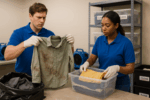
Water-damaged textiles are more than just soaking—they introduce serious contamination risks that can threaten your staff, equipment, and other customer items if not handled properly.
Why Contamination Risk Matters
Water-damaged textiles often carry invisible dangers that standard cleaning can’t address. Understanding these risks protects your business and builds the foundation for successful restoration work.
- Bacteria, mold spores, and chemical residues spread easily through equipment
- Cross-contamination can ruin other customers’ items and damage your reputation
- Improper handling creates health hazards for your staff
- Insurance carriers require documented safety protocols for restoration claims
Common Types of Contamination
Different water sources create different hazards, and each requires specific handling protocols to ensure safe processing.
- Mold and mildew (develops within 24-48 hours of water exposure)
- Bacteria from gray or black water (sewage, appliance overflow)
- Soot or smoke residue (from sprinkler activation after fires)
- Chemical runoff (pesticides, automotive fluids from garages/basements)
Safe Intake and Sorting Procedures
Proper handling starts the moment contaminated items arrive at your facility. These protocols protect your team and prevent contamination spread.
- Wear appropriate PPE (gloves, masks, protective clothing) for all handling
- Isolate items immediately in sealed, clearly labeled containers
- Sort by contamination severity before any processing begins
- Document everything with photos before opening packages
- Ensure adequate ventilation and sanitize all surfaces after intake
Creating a Dedicated Contamination Zone
Physical separation of water-damaged textiles prevents accidents and ensures contaminated items never mix with regular cleaning operations.
- Establish a separate area exclusively for restoration items
- Keep contaminated zones away from customer drop-off areas
- Use color-coded storage systems to distinguish clean from contaminated
- Train all staff on zone boundaries and prohibited cross-over procedures
Effective Cleaning Protocols
The right processes eliminate contamination while preserving fabric integrity. Standard water-damaged textiles cleaning methods won’t work for restoration items.
- Use enzyme or antimicrobial detergents specifically designed for contaminated materials
- Apply ozone treatment or thermal drying to eliminate spores and bacteria
- Never process restoration items with regular customer loads
- Avoid solvent reuse when contamination is suspected
- Thoroughly sanitize all equipment between contaminated batches
Essential Staff Training Components
One contamination mistake can shut down operations and damage your reputation. Comprehensive training prevents costly errors.
- Contamination identification and assessment skills
- Proper PPE usage and safety protocols
- Documentation and labeling requirements
- Clear escalation procedures for questionable items
How Professional Networks Support Success
Working with experienced restoration partners provides the expertise and systems needed for safe, profitable operations.
- Comprehensive safety training and ongoing support
- Detailed job specifications with contamination alerts
- Proper packaging, transport, and return protocols
- Industry-standard billing and documentation systems
Ready to expand into restoration work safely? Contact us to discuss how professional partnerships can help you succeed in textile restoration.
We’re here to help.
Get in TouchRelated Blog
Still Sneezing After Renovating? Your Fabrics Could be Causing Your Allergies After Home Renovation

Can Black Mold Mycotoxins Be Removed from Porous Household Fabrics and Clothing?

Can Smoke Odor Be Completely Removed from Upholstered Furniture After a Fire?