


Is Construction Dust Harmful to Your Home?
Renovation projects can transform your home, but they often leave behind a stubborn problem that shows up everywhere: construction dust. After the work is done, a fine layer of drywall dust, gypsum powder, plaster residue, and silica can settle on nearly every surface.
What looks like a harmless layer of “white powder” can actually cause long-term discoloration, fabric damage, and even health concerns—especially if the dust contains silica.
This guide breaks down what construction dust really is, why it spreads, how it impacts soft goods, and the safest steps you can take at home, including when textile restoration is the smarter move.
Understanding Construction Dust and Renovation Debris
Drywall dust is one of the most common types of post-renovation residue, but “construction dust” can include a mix of materials depending on the work.
It often contains:
- Gypsum (calcium sulfate) from drywall
- Plaster or joint compound residue
- Silica in some joint compounds, grout, concrete, tile work, or sanding products
- Wood dust from cutting and framing
- Paint and primer particles if sanding was involved
Because many of these materials break down into ultra-fine particles, they settle quickly and embed deeply, especially into fabrics.
Construction dust is incredibly lightweight. Particles often measure less than 10 microns, making them small enough to:
- Travel far beyond the renovation area
- Drift into HVAC systems and vents
- Resettle on clothing and upholstery with even light movement
- Evade standard vacuums or lint rollers
- Embed themselves deep within carpets and textile fibers
This is why homeowners often notice dust returning even after they clean—it becomes airborne again with the slightest disturbance.
Is Construction Dust Harmful to Your Family and Pets?
Construction dust can affect you, your family, your pets, and your textiles in ways that aren’t always obvious at first. Most drywall dust is considered a “nuisance dust,” but certain components (especially silica) can irritate your eyes, throat, and lungs, and may aggravate your asthma or allergies. If anyone in your home is very young, older, or already sensitive to dust, they may feel these effects even more quickly.
Your pets can be affected too. Dogs and cats spend a lot of time on soft surfaces where dust settles, and they may breathe in fine particles or ingest gypsum while grooming. This can cause coughing, sneezing, or mild digestive upset.
How Construction Dust Affects Soft Goods and Fabrics
1. Clothing
Dust settles into seams, pockets, ribs, and stitching. If washed incorrectly, gypsum can harden and create stiff, chalky patches that worsen with every wash.
2. Draperies and Curtains
These fabrics move with air currents and collect dust quickly. Gypsum can dull their color, make them appear gray or uneven, or cause them to feel stiff.
3. Rugs and Carpets
Fine particles sink far below the surface. Vacuuming helps but rarely reaches the deeper layers—and wet cleaning too soon can push gypsum deeper into the backing.
4. Upholstery
Couches, chairs, and mattresses act like dust traps. Renovation debris can settle inside foam layers, seams, and cushions, making it difficult to remove without the right equipment.
Construction Dust Control Starts Before You Clean
If you are researching how to control dust on a construction site, the biggest takeaway applies at home too: dust control works best when you limit how far the dust can travel before you start cleaning.
Even small remodeling projects can push dust into:
- HVAC returns and supply vents
- Closets and dresser drawers
- Upholstery seams and cushion foam
- Rug backing and carpet padding
- Laundry piles and fabric storage bins
If you are still mid-project, basic construction dust control steps can make your post-cleanup much easier:
- Seal doorways with plastic sheeting and painter’s tape
- Use a box fan in a window to exhaust dusty air outside
- Replace HVAC filters more frequently while work is happening
- Keep closet doors shut and textiles covered in sealed bins or bags
This is one of the simplest ways to protect soft goods before they become a hidden dust reservoir.
Safe Cleaning Methods for Homeowners
If contamination is light, you may be able to clean some soft goods at home. Use caution—gypsum and water do not mix well.
1. Start Dry Before You Add Any Moisture
When homeowners search how to clean construction dust, they often jump straight to mopping or wiping. Try to resist that at first. If you add water too soon, gypsum can turn into a paste that clings to fibers and leaves chalky residue behind.
2. Shake Out Items Outdoors (If Lightly Contaminated)
If you are trying to figure out how to remove construction dust from clothes, contain the dust first so you do not spread it through the house.
For lightly affected items, shaking or gently brushing outdoors helps reduce the dust load before cleaning. This keeps particles from spreading inside the home.
3. Use a HEPA Vacuum
A major reason people struggle is vacuum choice. Standard vacuums can blow fine dust back into the air, making the room feel dusty again within hours. If you are searching for the best vacuum for construction dust or the best HEPA vacuum for construction dust, the key feature is true HEPA filtration and a sealed system that prevents leakage.
Here are some of the best HEPA vacuums and/or filters for construction dust homeowners use:
Best Overall for Fine Construction Dust
- Miele Complete C3 Marin Canister with HEPA AirClean Filter: Excellent filtration and suction control, great for carpet, rugs, upholstery, and draperies.
Best Upright HEPA for Large Areas
- Kenmore Elite 31150 Pet-Friendly HEPA Upright Vacuum: Strong airflow and sealed HEPA system for deep carpet cleaning after renovation debris.
Best Lightweight HEPA for Quick Touch-Ups
- Shark Navigator Lift-Away Pro NV356E HEPA: Easy to move between rooms and lifts away for upholstery or stairs.
Pro Tip: Look for sealed HEPA systems that capture 99.97% of particles down to 0.3 microns—that’s crucial for fine construction dust rather than just larger debris.
4. Clean Construction Dust from Floors
For hard floors, you will get the best results by working in stages rather than trying to do one big pass.
- Vacuum slowly with a HEPA vacuum to pick up as much dry dust as possible.
- Follow with a dry microfiber mop to lift what the vacuum missed.
- Only then, use a lightly damp mop to finish the surface.
This approach helps you avoid pushing dust into corners, grout lines, or textured flooring.
5. Remove Construction Dust from Furniture
If you are searching how to clean construction dust from furniture, upholstery is where things get tricky. Sofas and chairs act like filters, so dust sits on the surface and inside seams and cushions.
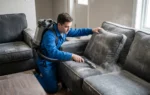
Start with careful HEPA vacuuming using an upholstery attachment. Go slowly and pay attention to seams, piping, and the areas where cushions meet the frame. Avoid steam cleaning or heavy wet products early on, because moisture can drive fine dust deeper into foam and batting.
6. Don’t Steam or Shampoo Carpets Immediately
Introducing moisture too soon can lock gypsum into carpet fibers, causing long-term damage.
When Professional Textile Restoration Is Needed
Home cleaning isn’t always enough, especially if your home was under renovation for several days or weeks, or if dust spread unexpectedly.
You may need professional textile remediation if:
- Your clothing develops white haze or patchy discoloration
- Curtains or draperies look dull or chalky
- Rugs feel gritty even after vacuuming
- Dust reached more than one room or traveled through HVAC systems
- You want to avoid possible silica exposure
- You have delicate, valuable, or sentimental textiles you don’t want to risk damaging
Professional equipment is designed to remove the gypsum and silica you can’t reach at home.
Restore Your Fabrics with Renewal
Construction dust can make a finished renovation feel unfinished. When residue settles into clothing, drapes, rugs, and upholstery, it keeps showing up and keeps affecting comfort. Renewal Claim Solutions helps homeowners restore soft goods safely after renovation-related contamination, especially when dust has embedded too deeply for household cleaning to fully resolve.
Contact us or submit a claim today for expert help after renovation-related contamination.
We’re here to help.
Get in TouchPeople Also Ask
Can construction dust ruin clothing or fabrics?
Yes. Construction dust is made of tiny gypsum particles that settle into fabric. If you rub or wash items too soon, that dust can grind in and leave pale streaks or stiff, chalky spots that don’t rinse out. Dark clothes, upholstery, and rugs usually show the damage first because the white residue stands out. The safest approach is to remove as much dry dust as possible before any washing. If textiles were heavily exposed, professional remediation can prevent lasting discoloration.
Is construction dust dangerous to breathe?
It can be more than just annoying. Breathing in drywall dust may cause scratchy throat, sneezing, or dry, irritated eyes, especially if you’re cleaning for hours. Some renovation dust also contains silica from joint compound, which can be tougher on your lungs and trigger asthma or allergy flare-ups. You might notice symptoms more at night or in rooms where dust settled into carpets or furniture. If irritation continues after basic cleanup, it’s a sign that fine particles are still lingering in your home.
How do I remove construction dust from curtains or rugs?
Begin with slow, careful HEPA vacuuming to lift dust off the surface without blowing it around. For curtains, vacuum from top to bottom and pay attention to pleats or hems where particles collect. For rugs, avoid wet cleaning right away—gypsum can clump when damp and sink deeper into fibers. If you need to shake something out, do it outdoors and away from open windows. When rugs still feel gritty or curtains look dulled after vacuuming, deeper textile cleaning may be needed.
Can construction dust spread beyond the renovation area?
Absolutely. Renovation dust doesn’t stay put—it moves on airflow, settles in nearby rooms, and can hitch a ride through vents even if doors were closed. You may notice residue showing up on bedding, clothing in closets, or furniture far from the work zone. Because the particles are so fine, they can resurface when you walk through a room or turn on the heat or AC. Treating the renovation area alone often isn’t enough if the dust traveled through the rest of your home.
Can you get sick from construction dust?
You can feel sick from it, especially if you are sensitive. People commonly report headaches, sinus irritation, coughing, or worsened asthma symptoms after exposure. Pets can also react because they spend time on floors and soft surfaces where dust settles. If irritation continues after basic cleaning, it is worth treating it as an indoor air and textile issue, not just a surface dust problem.
Do I need professional cleaning for all my clothing?
Yes. Construction dust almost always spreads beyond the renovation area. Drywall dust is extremely lightweight and can travel through hallways, vents, and HVAC systems, even settling in rooms far from where the work took place. It’s best to assume it has reached other areas of your home unless a professional confirms otherwise.
Related Blog
Still Sneezing After Renovating? Your Fabrics Could be Causing Your Allergies After Home Renovation
Can Black Mold Mycotoxins Be Removed from Porous Household Fabrics and Clothing?

Can Smoke Odor Be Completely Removed from Upholstered Furniture After a Fire?