Mold Spores in the Air: Why Fabrics Keep Re-Infecting Your Home
You had the mold remediated. The walls were treated, the damaged drywall was removed, and the moisture source was fixed. So why does the mold keep coming back?
For many homeowners, the answer is sitting in the living room, hanging in the closet, or draped across the bed. Knowing how to remove mold spores from fabric is a critical and often overlooked part of whole-home mold remediation. Soft goods that were present during a mold event can harbor spores long after the structural work is complete and re-seed the problem every time conditions allow growth to restart.
What to Do Right Now
If mold has been found or treated in your home and you are concerned about soft goods:
- Do not move mold-affected textiles to other rooms before they are treated. Moving contaminated fabric spreads spores to new areas.
- Confirm that the moisture source has been fully resolved before attempting any textile remediation. Treating fabrics while moisture conditions persist will not produce lasting results.
- Include soft goods in your remediation plan, not just the structural materials. If your mold remediator did not address fabric items in affected rooms, that is a gap worth addressing.
- Contact a textile restoration specialist with mold experience for evaluation of upholstered furniture, rugs, drapes, and other porous soft goods.
The Problem: How Mold Spores Get into Fabrics
Mold spores are microscopic reproductive particles that travel through the air whenever mold colonies are disturbed or actively releasing spores. A room with visible mold on the wall is also a room with elevated spore counts in the air. Those spores settle on every surface, including soft goods.
Mold spores on fabric are particularly persistent because:
- Fabric fibers trap and hold spores. Unlike smooth, hard surfaces where spores can be wiped off, fabric fibers create a physical structure that captures particles and holds them in place.
- Spores can survive after being dormant for years. Mold spores do not die when the environment dries out. They go dormant and reactivate whenever moisture returns, making fabric a persistent reservoir that can re-seed the home repeatedly.
- Can heat kill mold spores on fabric? High heat can kill some mold spores, but not reliably across all fabric types, and not at the temperatures achievable in a standard dryer. The spores and their structural proteins can resist dryer temperatures sufficient to damage delicate fabrics before the spores are fully deactivated.
Which Fabrics Are Most at Risk
Some household textiles carry far greater re-infection risk than others. The most problematic are items that were in the affected space during active mold growth:
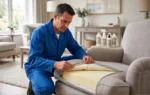
- Upholstered furniture: Foam cushioning and batting create an interior environment that can support mold growth independently of the room’s surface conditions. Mold spores in furniture fabric can live and re-colonize as a self-contained reservoir.
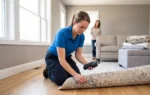
- Area rugs and carpeting: Backing materials and padding trap moisture and spores below the surface, where they are invisible but active.
- Drapes and curtains: Window treatments in moisture-prone rooms absorb both spores and humidity, creating conditions for continued mold activity along window walls.
- Stored clothing and bedding: Items stored in affected rooms during a mold event may carry spores that are invisible at the time but reactivate when conditions allow.
What Happens if You Do Nothing
The structural remediation you paid for will not hold if the re-contamination source is still in the room. Mold spores from untreated fabrics re-settle on walls, floors, and HVAC surfaces whenever the fabric is disturbed through regular use, cleaning, or simply air movement. The next time indoor humidity rises slightly above normal, those dormant spores have a fresh food source and ideal conditions to grow. This cycle is the most common reason homeowners face repeated mold problems despite investing in professional remediation.
How to Remove Mold Spores from Fabric: What Works
Effective mold spore removal from fabric requires methods that go beyond surface cleaning. For washable clothing and bedding, a targeted approach using an antimicrobial laundry additive in a hot wash cycle can be effective for light contamination. But for upholstery, rugs, drapes, and items with heavier mold spore loads, professional treatment is more reliable.
A professional textile remediation process for mold includes:
- Item evaluation: Each item is assessed for mold spore load, visible growth, and fabric construction before deciding on treatment or disposal.
- Mold-specific treatment agents: Antimicrobial treatments designed for textiles are applied, matched to the fabric type and level of contamination.
- Multi-layer extraction: Treatment penetrates into backing, foam, and interior fiber layers where spores settle, not just the visible surface.
- Controlled drying: Items are dried under controlled conditions to eliminate any residual moisture that could reactivate spore growth.
Break the Re-Infection Cycle for Good
If mold keeps returning in your home despite remediation, the answer may be in your fabrics. Knowing how to remove mold spores from fabric, and acting on it as part of your overall mold remediation plan, is often the missing step that stops the cycle. Treating the walls but leaving contaminated upholstery and rugs in place is like patching a leak while the drain is still open.
If mold spores in your home’s fabrics are contributing to a recurring mold problem, contact Renewal Claim Solutions for a professional textile evaluation and a remediation plan that addresses the full picture.
We’re here to help.
Get in TouchPeople Also Ask
Can mold spores live on furniture?
Yes. Mold spores settle on and within upholstered furniture and can remain dormant for extended periods, reactivating when humidity rises. Furniture in rooms with past or current mold activity should be evaluated as part of any remediation plan.
Can heat kill mold spores on fabric?
High heat can kill some mold spores, but not reliably at dryer temperatures safe for most fabrics. For heavily contaminated items or non-washable textiles, antimicrobial treatment by a professional is more effective than heat alone.
How do I clean mold spores off furniture?
For upholstered furniture, surface wiping is insufficient because spores settle into the fabric, foam, and batting layers. Professional textile remediation uses antimicrobial agents applied at multiple layers, combined with controlled drying to ensure no residual moisture remains to support regrowth.
Why does mold keep coming back after remediation?
The most common reasons include unresolved moisture sources, incomplete remediation of porous materials, and mold spores remaining in soft goods like furniture, rugs, and drapes. These items act as re-contamination reservoirs, re-seeding surfaces whenever conditions allow growth. Including textiles in the remediation plan addresses this gap.
What kills mold spores on fabric?
Antimicrobial agents specifically formulated for textiles are the most reliable option, applied by a professional who can match the treatment to the fabric type. For washable items with light contamination, an antimicrobial laundry additive in hot water can reduce spore counts. For heavier contamination or non-washable items, professional treatment is necessary.
Related Blog
Still Sneezing After Renovating? Your Fabrics Could be Causing Your Allergies After Home Renovation
Can Black Mold Mycotoxins Be Removed from Porous Household Fabrics and Clothing?
Can Smoke Odor Be Completely Removed from Upholstered Furniture After a Fire?